Airlock in Central Heating: Signs, Causes and How It Is Cleared
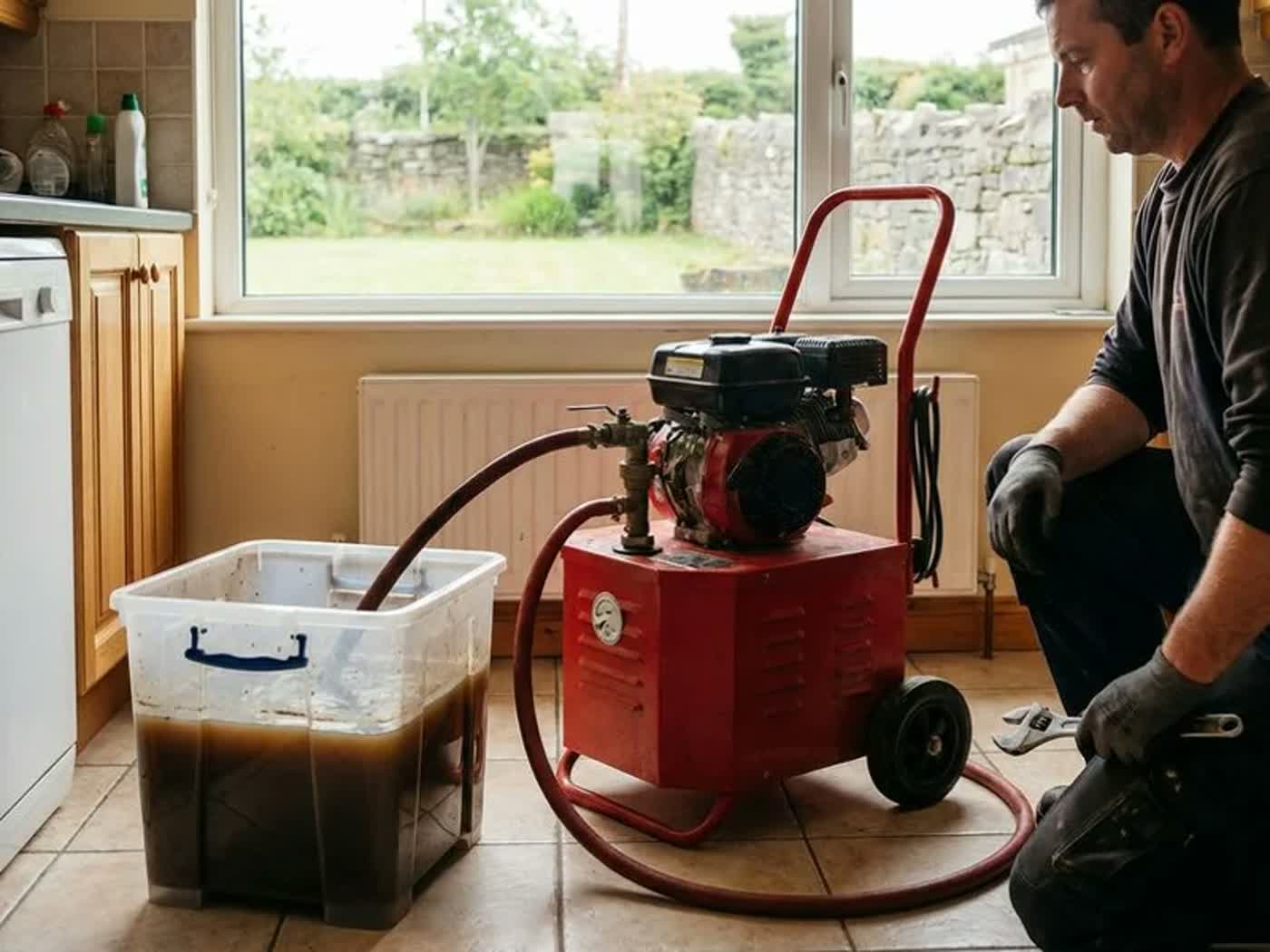
An airlock is a pocket of trapped air that stops water circulating through part of a heating system. It usually follows draining, low pressure or a leak. Bleeding radiators clears most of them; air that keeps coming back points to a fault that needs finding.
An airlock in a central heating system is a pocket of trapped air that blocks water from flowing through part of the pipework. The usual result is radiators that stay cold, often upstairs or at the far end of the house, while the boiler runs. Most airlocks clear with careful bleeding; air that keeps returning means something is letting it in.
How to Tell If Your Heating Has an Airlock
The clearest signs are radiators that stay completely cold while others heat, gurgling or trickling sounds in the pipes, and a boiler that runs but never seems to deliver heat to part of the house. The problem often appears straight after the system has been drained or worked on.
- one or more radiators stone cold from top to bottom, often the highest ones in the house
- radiators warm at the bottom but cold at the top, which is air collecting in the radiator itself
- gurgling, bubbling or rushing water sounds when the heating starts
- a pump that runs noisily or hums without moving water
- the boiler heating up very quickly and then stopping, because the water is not circulating away from it
A radiator that is cold only at the bottom is different. That usually means sludge rather than air, and bleeding will not help. Our guide to radiators cold at the top or bottom explains how to tell them apart.
What Causes an Airlock
Air gets into a heating system when it is drained and refilled, when the pressure falls on a sealed system, or when a fault lets air in during normal running. Occasionally gas is produced inside the system by corrosion.
The most common cause is recent work. Draining down to replace a radiator or valve lets air into every pipe, and refilling pushes it into the highest points, where it gets stuck. Radiators on upper floors and long runs of pipe under floors are the usual places. On a sealed system, low pressure makes things worse, because there is not enough pressure to push water up to the top of the house and drive air towards the bleed points.
On older open-vented systems with a tank in the loft, air can be drawn in through the vent pipe if the pump is too fast or the pipework is laid out badly, and a low feed tank can let air in as well. Small leaks can also draw air in on the suction side of the pump without dripping much water. And where steel radiators are corroding inside, the reaction produces gas that behaves exactly like trapped air.
Clearing an Airlock: What You Can Safely Do
Bleeding the radiators is the first step and clears most airlocks. It is a water-side job that does not involve the boiler's gas parts, so it is safe for most homeowners to do with a radiator key and a cloth.
Turn the heating off and let the radiators cool, so hot water does not spray out. Open each bleed screw a quarter turn until air stops hissing and water appears, then close it. Work through every radiator in a sensible order, then check the boiler pressure gauge. Our guide on which radiator to bleed first covers the order and why it matters. On a sealed system, bleeding lowers the pressure, so it will usually need topping back up afterwards; if you are not sure how, our guide on whether to repressurise the system yourself explains when to call an engineer instead.
Run the heating for a while and bleed again. Stubborn air in long pipe runs often takes two or three rounds to shift. Do not open the boiler casing or try to bleed a pump inside the boiler; parts of it are connected to the gas supply, and work inside a gas appliance must be done by a Gas Safe registered engineer.
When Bleeding Does Not Clear It
If radiators stay cold after bleeding, the air may be trapped in pipework with no bleed point, or the fault may not be air at all. At that stage the system needs a proper look rather than more bleeding.
An engineer can force water through the stubborn section with the pump at a higher setting, close off the radiators that are working to push flow towards the cold ones, or use a filling and purging rig to drive air out under pressure. On open-vented systems, the pump position and vent pipe arrangement may need changing so air stops being drawn in.
It is also worth ruling out faults that look like an airlock. A seized pump, a zone valve stuck closed, or a radiator valve that has been left shut can all leave radiators cold with no air involved. Checking these first avoids hours of bleeding a system that has nothing wrong with its water.
Air That Keeps Coming Back
If you need to bleed the same radiators every week or two, something is letting air in or producing gas. The repeated bleeding is treating the symptom; the cause needs finding.
The usual suspects are a small leak that draws air in, a sealed system that keeps losing pressure, an open-vented system that pumps water over the vent pipe, and corrosion inside steel radiators. Corrosion is worth taking seriously: it produces gas and black sludge, and over time it leads to pinhole leaks and blocked radiators. A water test tells an engineer whether the system is corroding, and whether cleaning and fresh inhibitor are needed. If the water is heavily contaminated, a power flush followed by a magnetic filter usually stops the gas and the sludge together.
Preventing Airlocks After Work on the System
Most airlocks can be avoided by refilling the system slowly, bleeding it methodically, and adding inhibitor to the fresh water. Good practice after any drain-down should include all three.
When a system has been drained, it should be refilled slowly, with the radiators bled from the lowest to the highest points as water rises, then run hot and bled again. On a sealed system, the pressure should be set correctly once the air is out. Fresh inhibitor protects the water from the corrosion that creates gas later. If a quote for draining and refilling does not mention bleeding, repressurising and inhibitor, ask about it before the work starts.
Frequently asked questions
Can an airlock stop the whole central heating working?
Yes. If air collects around the pump or in the main pipes near the boiler, water may not circulate at all. The boiler then heats quickly, overheats its own water and shuts down, while every radiator stays cold. Air in that part of the system usually needs an engineer rather than radiator bleeding.
Will an airlock clear by itself?
Sometimes a small pocket of air works its way to an automatic air vent or a radiator and can be bled off. A proper airlock blocking a pipe run rarely clears on its own, and running the heating with part of the system not circulating wastes energy and can strain the pump.
Why are my upstairs radiators cold after bleeding?
On a sealed system, bleeding lowers the pressure, and there may not be enough left to push water up to the top floor. Check the boiler gauge and top the pressure up if it has dropped. If it is correct and the upstairs radiators are still cold, the cause may be a zone valve, balancing or a stubborn airlock in the pipework.