Can You Power Flush Underfloor Heating? How It Works and What It Costs
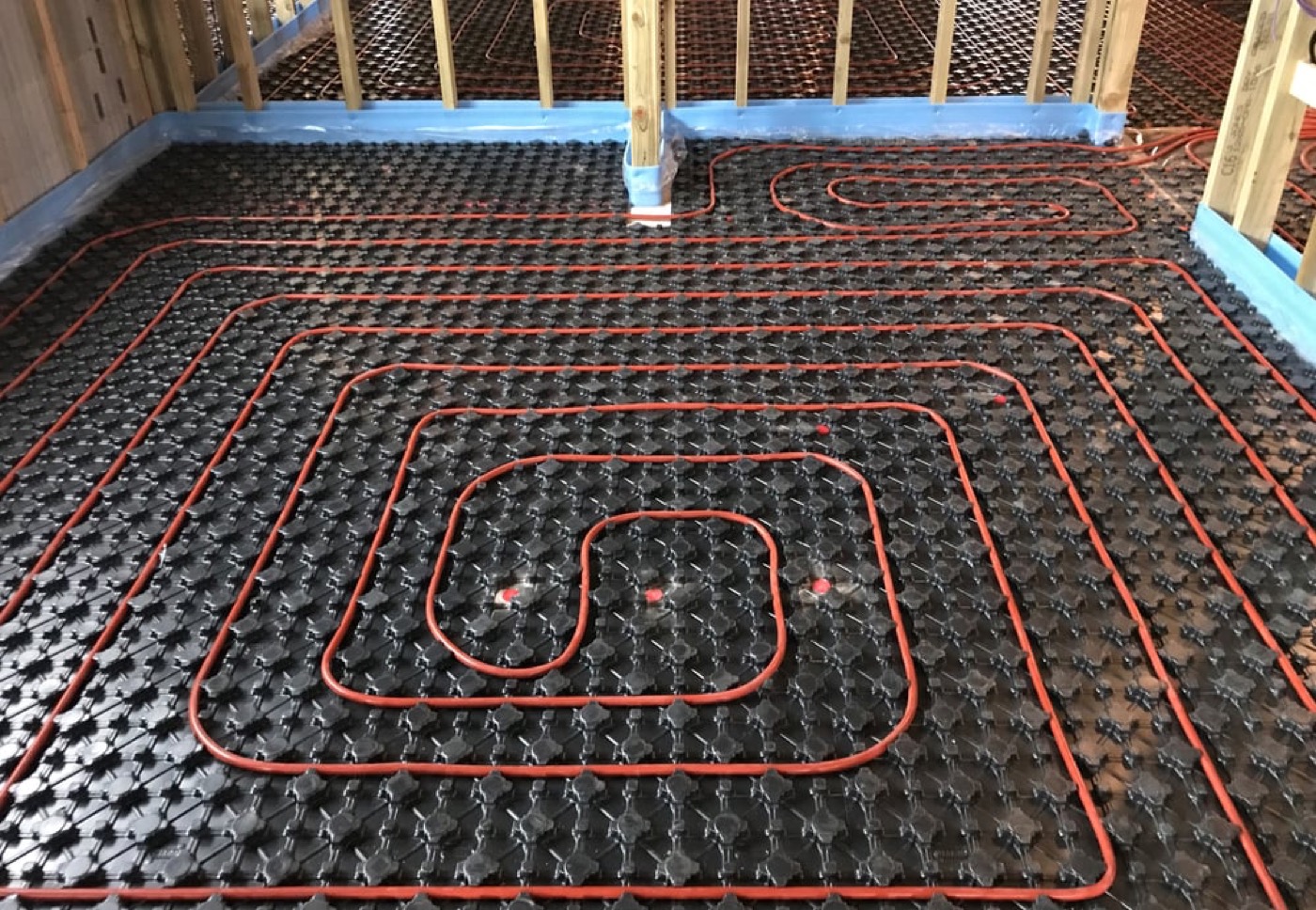
Yes, a wet underfloor heating system can be power flushed, but it is done one loop at a time from the manifold rather than through the whole system at once. It helps when loops are clogged with sludge or slime, and does nothing for a failed actuator, pump or thermostat.
Yes, you can power flush wet underfloor heating, but not in the same way as a radiator system. Each pipe loop is isolated at the manifold and flushed on its own, because the loops are long, narrow and run at low flow. Electric underfloor heating has no water in it, so there is nothing to flush. For how power flushing works on a whole system, see our power flush guide: signs, process and what it fixes.
Why Underfloor Heating Is Flushed Differently From Radiators
Underfloor loops are flushed one at a time because a single pump pushing through every loop at once takes the easiest path and leaves the blocked loops untouched. The loops are the problem you are trying to fix, so each one needs the full flow on its own.
A radiator system has short runs of wide pipe feeding large water spaces. An underfloor circuit is one continuous run of narrow plastic pipe, often many tens of metres long, buried in screed or sitting in a panel under the floor. Water moves through it slowly and at a lower temperature than a radiator circuit. Debris that would pass straight through a radiator can settle in these loops, and once a loop is partly blocked, water simply goes round the other loops instead.
That is why a standard radiator power flush connected at the boiler rarely clears underfloor pipes. The engineer works at the manifold instead, closing every loop except the one being cleaned, then moving along the manifold loop by loop. Where it helps, the flow is also reversed through a loop to lift deposits that have settled in one direction.
What Actually Blocks Underfloor Heating Pipes
The two usual culprits are black iron oxide sludge carried over from the boiler and radiator side of the system, and a slimy biological film that grows inside the plastic pipe. Each needs a different cleaning chemical, which is why diagnosis comes before flushing.
Sludge comes from corrosion of steel radiators, pipework and the boiler's heat exchanger. If your underfloor heating is fed from the same system as your radiators, that sludge can travel into the manifold and loops. Biological slime is more common in older systems, in systems topped up often with fresh water, and in systems that were never dosed with a suitable inhibitor. Low temperatures in underfloor circuits suit the bacteria that cause it.
Older underfloor pipe without an oxygen barrier lets small amounts of oxygen into the water, which speeds up corrosion elsewhere in the system. That does not stop a flush working, but it does mean the system will need proper water treatment afterwards or the problem comes back.
Signs Your Underfloor Loops Need Flushing
The clearest sign is a zone that stays cool while the rest of the floor heats, with its flow meter on the manifold showing little or no flow. Slow warm-up across the whole floor, and dark or cloudy water when a sample is taken, point the same way.
- one room or strip of floor stays cold while others warm normally
- flow meters on the manifold read low or zero on some loops with the valves open
- the floor takes much longer to warm up than it used to
- discoloured water, or a smell, when the system is drained or a sample is taken
- the radiator side of the same system already shows sludge, such as radiators cold at the bottom
If only one loop is affected and the water is clean, the fault is often mechanical rather than a blockage, which the next section covers.
When a Flush Is the Wrong Answer
A flush will not fix a cold zone caused by a failed actuator, a faulty room thermostat or wiring centre, a stuck mixing valve, or a pump that has stopped. These faults are common, cheaper to put right, and should be ruled out first.
Each loop on the manifold usually has an actuator, a small electric head that opens the loop when the room thermostat calls for heat. When one fails, that zone stays cold even though the pipe inside is perfectly clear. The same happens if the room thermostat has lost its signal, or the wiring centre has a fault. A mixing valve that sticks can leave the whole floor lukewarm, and a failed underfloor pump stops circulation completely.
Air is another cause. A loop that has been drained and refilled can hold an air lock that stops flow until it is purged. An honest engineer checks all of this before recommending a flush, because paying to clean a loop that was never blocked solves nothing. If the problem is uneven heat rather than a blockage, the loops may simply need balancing at the manifold, in the same way radiators do.
What an Underfloor Heating Flush Involves
A proper underfloor flush isolates each loop at the manifold, flushes it with a suitable cleanser until the water runs clear, then treats the refilled system with inhibitor. The radiator side should be cleaned too if that is where the sludge started.
In practice the job usually runs like this:
- check actuators, thermostats, pump and mixing valve so a mechanical fault is not missed
- take a water sample to see whether the problem is sludge, slime or both
- connect the flushing equipment at the manifold and isolate every loop but one
- flush that loop, reversing the flow where it helps, until the water runs clear
- repeat for each loop, then refill, purge air and dose with inhibitor
- check the flow meters and rebalance the loops so each room gets the right share of flow
A magnetic filter on the return to the boiler is worth considering afterwards, because it catches new iron debris before it reaches the manifold again.
What Sets the Cost of Flushing Underfloor Heating
The price depends mainly on how many loops the manifold has, how badly they are blocked, and whether the radiator side of the system also needs cleaning. We quote underfloor flushing after a survey rather than as a flat rate, because two floors of the same size can take very different amounts of work.
A small kitchen extension on a two or three port manifold is a much shorter job than a ground floor with a manifold of ten loops or more. Heavy slime usually needs longer contact time with the cleaning chemical than light sludge. Access matters as well: a manifold in a tight cupboard or under stairs slows the work. And if the whole system is dirty, flushing only the floor leaves the source of the sludge in place, so a combined radiator and underfloor clean is often the better value over time. Our guide to what a power flush costs in London covers the radiator side.
Cold zones on your underfloor heating? We check the manifold, actuators and controls first, tell you plainly whether flushing will help, and quote a fixed price if it will. See our underfloor heating service or book a survey.
Frequently asked questions
Can a normal power flush machine clean underfloor heating?
The same kind of pump can be used, but it needs to be connected at the underfloor manifold with the loops cleaned one at a time. Connecting at the boiler and flushing the whole system at once tends to bypass the blocked loops, which is why a radiator-style flush often leaves underfloor pipes untouched.
Can electric underfloor heating be flushed?
No. Electric underfloor heating uses heating cables or mats rather than water pipes, so there is nothing to flush. A cold area on an electric system points to a thermostat, sensor, connection or cable fault, which needs an electrician rather than a heating engineer.
How often does underfloor heating need flushing?
There is no fixed interval. A system with clean water, a working inhibitor dose and a magnetic filter may never need it. Flushing is worth doing when loops show low flow on the manifold or water samples are dirty, and after work that has let debris into the system.