Why Won't My Heating System Hold Pressure? System-Level Causes Explained
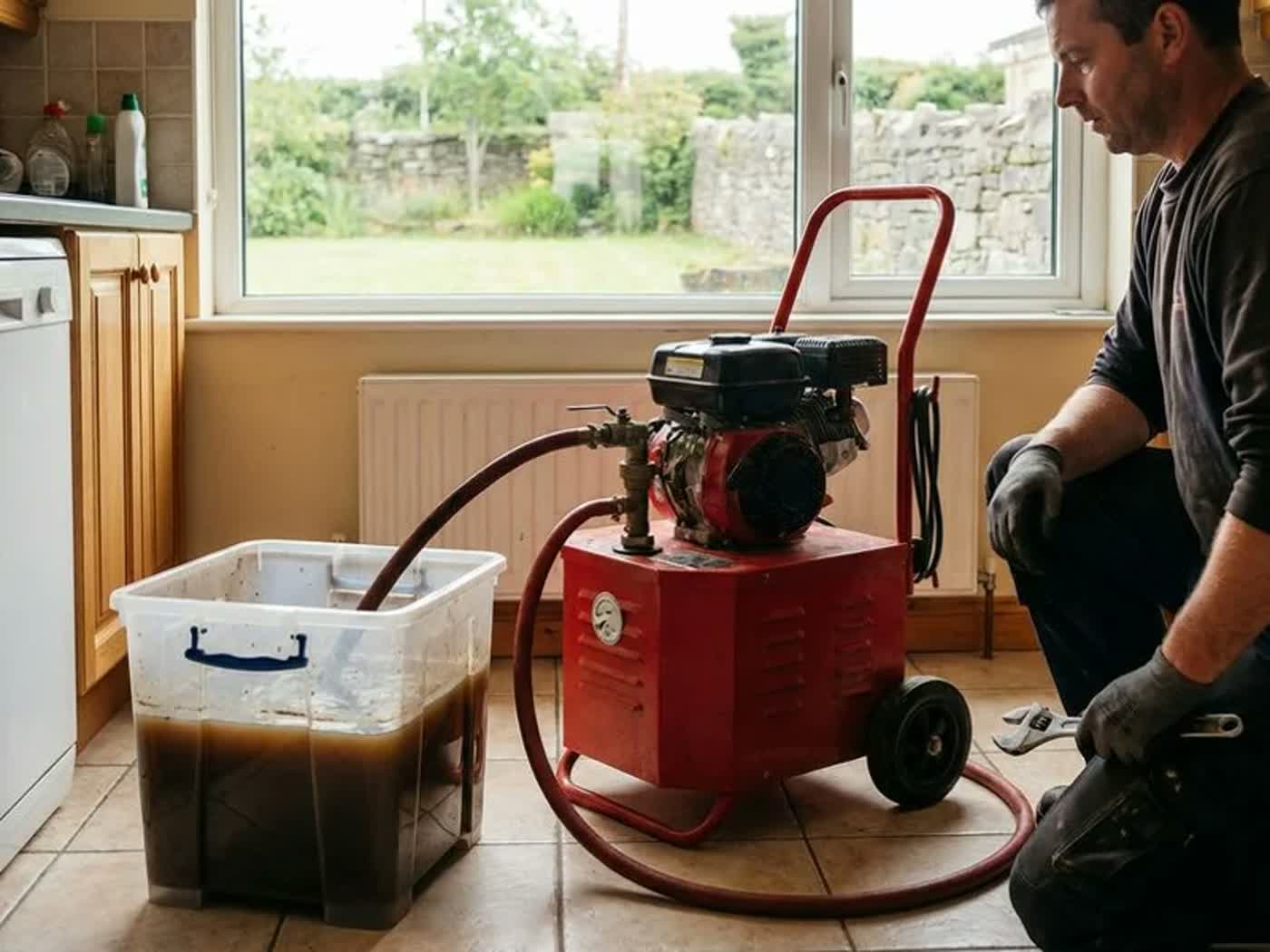
If your heating system won't hold pressure, the cause is often a system-level issue we can resolve, not an internal boiler fault. This guide explains the common culprits and solutions.
A heating system that won't hold pressure is a common and frustrating issue. While many immediately suspect a boiler fault, the cause is often found within the wider system itself—the pipes, radiators, valves, and components that distribute heat around your home. This article focuses on those system-level causes, which are the core of our work. If diagnostics point to an internal boiler component like the pressure relief valve or heat exchanger, that becomes a job for a specialist boiler engineer, not us.
A Bleed Valve or Radiator Valve Not Fully Closed
This is one of the most frequent, and simplest, causes of slow pressure loss. After bleeding radiators to remove trapped air, it's easy to not fully tighten the bleed valve (the small square-key valve at the top of a radiator). Even a quarter-turn from fully closed can allow a tiny, persistent leak of water. Similarly, a manual radiator valve (the wheel-head or thermostatic radiator valve (TRV) body) might not be fully seated.
Diagnosis and Fix
Check every radiator in the house. Ensure all bleed valves are fully closed—you shouldn't be able to turn the bleed key with light pressure. Inspect the valve tails and connections for any signs of moisture or white, limescale-like deposits (dried system inhibitor). Tightening a loose valve often solves the issue immediately. If a valve is damaged or the seal has failed, it may need replacement, which is a straightforward job for our engineers.
A Weeping Pipe Joint After New Work or an Extension
Pressure loss that begins after recent system work—like adding a new radiator, moving a pipe, or installing underfloor heating—often points to a compromised joint. A soldered capillary joint or a compression fitting might not have been perfectly sealed, leading to a very slow weep. The water may evaporate before it forms a visible puddle, making it hard to spot.
Diagnosis and Fix
Carefully inspect all areas where work was recently carried out. Look for subtle green or white corrosion marks on copper pipes below fittings, or slight dampness on floorboards or insulation. A professional system pressure test can accurately locate such leaks. Our approach involves isolating the section, repairing or remaking the joint properly, and then re-pressurising and testing the entire system to ensure integrity.
An Ageing Expansion Vessel Losing Charge
The expansion vessel is a critical system component (often located inside the boiler casing) that absorbs the increased water volume as it heats up. It contains a rubber diaphragm and an air charge. Over years, this air charge can slowly seep out, a process known as 'losing its pre-charge'. When this happens, the system pressure fluctuates wildly—rising too high when hot and then dropping too low when cold, often triggering a boiler lockout.
Important note: While the symptom is system-wide pressure fluctuation, diagnosing and recharging or replacing the vessel often requires accessing parts within the boiler casing. Therefore, this may require a boiler engineer. We can identify the symptom and advise if the vessel is the likely cause, but the physical work might be outside our scope.
Open System vs Sealed System Confusion
Some older properties still have 'open-vented' heating systems, which feature a feed-and-expansion tank in the loft. These systems do not have a filling loop and are not manually pressurised. If you are trying to top up pressure on such a system via a non-existent filling loop, or if the ball valve in the loft tank is stuck, it will appear as if the system 'won't hold pressure'. Conversely, in a modern sealed system, repeatedly topping up via the filling loop without finding the root cause of the loss is not a solution.
Diagnosis and Fix
First, establish what type of system you have. Do you have a small tank in your loft? If so, check that the ball valve moves freely and the tank isn't empty. For sealed systems, the focus must be on finding the leak or cause of air ingress, not just repeatedly topping up. We can convert open-vented systems to sealed systems as part of a system upgrade, which eliminates loft-tank problems and provides more stable pressure.
Recent Radiator or TRV Replacement Not Fully Bled and Re-Pressurised
After replacing a radiator or a TRV, two crucial steps are sometimes overlooked: thorough bleeding and system re-pressurisation. Air trapped in the new radiator or the associated pipes creates an 'air lock' and uneven pressure distribution. Furthermore, draining down part of the system to do the work lowers the overall pressure, which must be correctly restored via the filling loop.
Diagnosis and Fix
If pressure loss or cold spots followed a recent installation, this is the likely culprit. The solution is methodical. First, ensure the system is pressurised to between 1 and 1.5 bar when cold. Then, bleed the new radiator and any others that feel cold at the top. You will likely need to top up the pressure again after bleeding. Our system balancing service ensures all radiators are bled, pressurised correctly, and balanced for optimal heat output and system stability.
Frequently asked questions
My pressure drops slowly over a week. Is it an emergency?
A slow, consistent pressure drop typically indicates a minor leak or weeping joint and is not an emergency. It is a planned maintenance issue. However, a rapid drop that causes the boiler to lock out daily should be investigated sooner to prevent damage.
Can a magnetic filter cause pressure loss?
A properly installed magnetic filter itself should not cause pressure loss. However, if its isolation valves or the seal on its cleaning head are not tight, it can develop a leak. During a system power flush or filter installation, we check every connection for leaks before we leave.
How often should I need to top up my sealed system's pressure?
You should rarely, if ever, need to top up a healthy sealed system. Needing to add pressure more than once or twice a year is a clear sign of a problem, such as a minor leak, an expansion vessel issue, or trapped air that needs resolving.
If my expansion vessel needs recharging, is that a big job?
Recharging the air pre-charge in an expansion vessel is a straightforward procedure for a qualified engineer, but it often requires access inside the boiler casing. Therefore, while we can diagnose the symptom, the physical work may fall to your boiler service provider.