Chemical Flush vs Power Flush: Which Does Your Heating System Need?
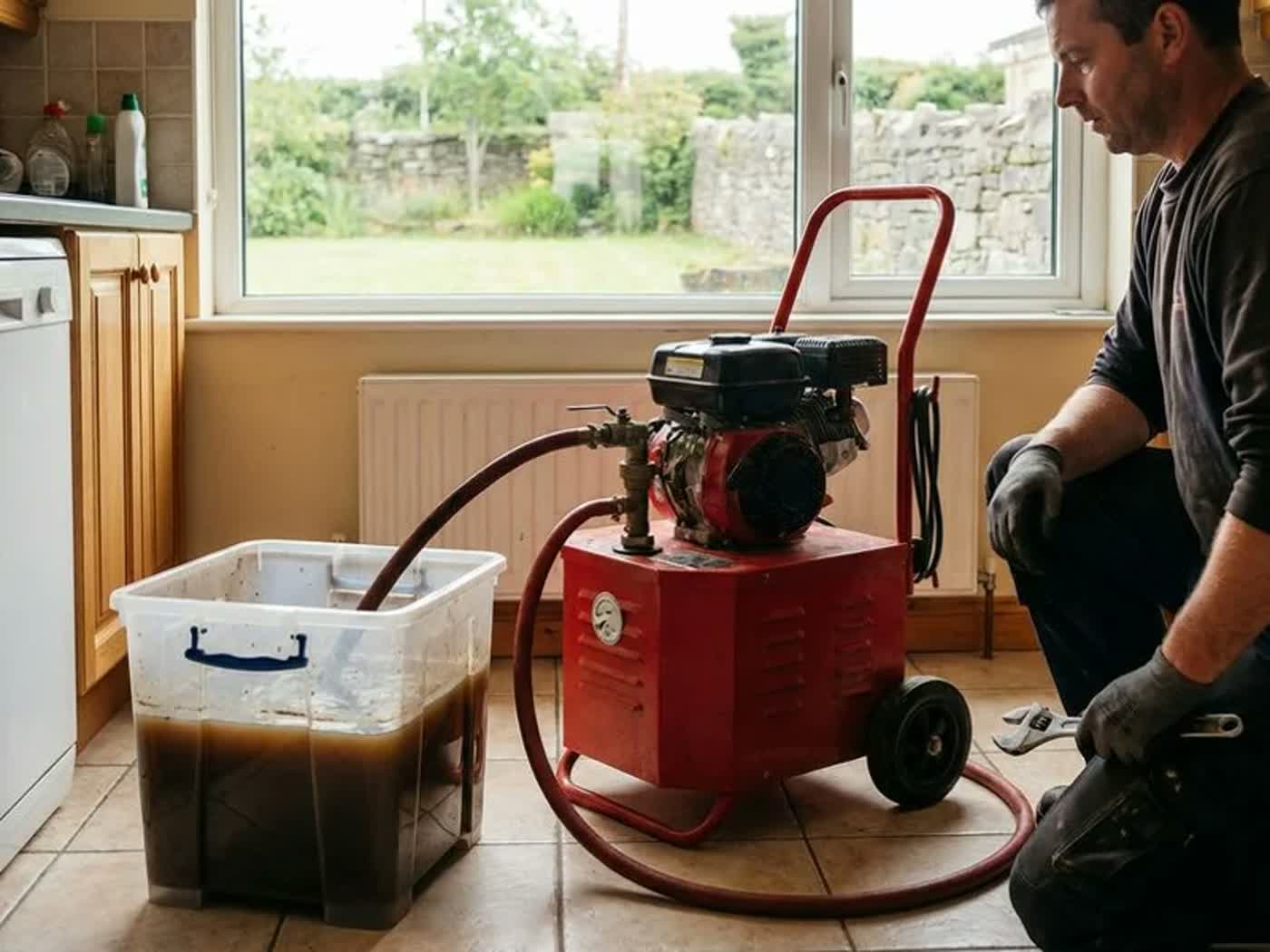
A chemical flush is as good as a power flush only when the system is lightly contaminated. Where radiators are cold at the bottom or the bleed water comes out black, a power flush is the one that actually shifts the sludge.
A chemical flush is as good as a power flush only when the heating system is lightly contaminated. If the water is discoloured but radiators still heat evenly, a chemical clean usually does the job for less. If radiators are cold along the bottom, the bleed water comes out black, or the system has not been cleaned in many years, a power flush is the method that actually moves the sludge out. The right choice depends on how dirty the system is, not on which one sounds more thorough.
What Is the Difference Between a Chemical Flush and a Power Flush?
Both use a cleaning chemical; the difference is what pushes it round the system. A chemical flush relies on the boiler's own circulating pump, while a power flush uses a separate high-flow pump connected to the system for the duration of the job.
In a chemical flush, a cleanser is added to the system water and the heating is run as normal. Depending on the product, it is left in for anything from an hour or so to several weeks, then the system is drained, rinsed with fresh water, refilled and dosed with inhibitor. The cleanser loosens and suspends deposits, but the flow rate is only what the boiler pump can manage.
In a power flush, the engineer connects a dedicated flushing pump, usually in place of the circulating pump or across a radiator. The chemical is driven through at much higher flow, the direction is reversed repeatedly, and radiators are isolated and flushed one at a time until the water runs clear. The loosened sludge is dumped out as it goes rather than left circulating. It is usually done in a day; our guide to how long a power flush takes walks through the day itself.
Is a Chemical Flush as Good as a Power Flush?
For light contamination, yes. For established sludge, no, because a chemical can loosen deposits but the boiler pump cannot shift heavy debris out of the radiators.
Sludge settles in the bottom of radiators, where the flow is slowest. A boiler pump running at normal speed does not generate enough velocity to lift it out. What often happens after a chemical clean on a badly sludged system is that the cleanser loosens the deposit, some of it moves, and it lodges somewhere else: a narrow valve, a section of microbore pipe, or the boiler's heat exchanger. That is why engineers are cautious about chemical-only cleaning on neglected systems.
When a Chemical Flush Is the Right Choice
A chemical flush suits systems that are in reasonable condition but need cleaning before something changes. Typical cases:
- Relatively new systems where the water is only slightly discoloured and every radiator heats fully.
- Systems that have been looked after, with inhibitor topped up and a magnetic filter already fitted.
- Weak or fragile pipework, such as old radiators that already weep at the seams, where a gentler clean carries less risk of exposing leaks.
- Newly installed pipework and radiators, which need cleaning of flux and manufacturing residue before first use.
If your bleed water runs clear and your radiators heat evenly, the system may not need a flush at all. Uneven heat on its own is more often a balancing problem than a sludge problem.
When You Need a Power Flush Instead
You need a power flush when the symptoms point to settled sludge rather than dirty water. The clearest signs are radiators cold at the bottom and warm at the top, black or brown water when you bleed them, and a system that takes much longer to warm up than it used to.
Other signs include radiators that need bleeding again and again, a boiler that kettles or bangs, and a magnetic filter that fills with black debris every time it is cleaned. Our guide to the signs your central heating needs a power flush sets these out in more detail. If several apply, a chemical clean alone is unlikely to restore the lost heat output.
What About a Mains Flush?
A mains flush is a third option, using mains water pressure through the system instead of a flushing pump. It is useful where the system is small, or where pipework is too fragile for a power flush, but it cannot reverse flow or push chemical through at the same rate.
The British Standard for cleaning and treating central heating water, BS 7593, describes these methods and the steps around them: cleaning, flushing until clear, then adding inhibitor. The method matters less than whether the job is actually finished, which means clean water and a correctly dosed inhibitor at the end.
How the Cost Compares
A chemical flush almost always costs less, because it needs less labour and no flushing rig on site. A power flush takes most of a day and involves more equipment, chemical and waste disposal, so the price reflects that. Our guide to the power flush machine and its equipment explains what that rig does and whether hiring one makes sense.
The cheaper option is only a saving if it solves the problem. Paying for a chemical clean on a heavily sludged system, then paying again for a power flush when the radiators are still cold, costs more than doing the right job first. Our article on what a power flush costs in London covers what should be included in a quote, and a survey tells you which method the system needs before you commit to either.
Protecting the System Afterwards
Whichever method is used, the result lasts only if the water is protected afterwards. That means a fresh dose of inhibitor at the right concentration and, ideally, a magnetic filter on the return pipe to the boiler.
Inhibitor slows the corrosion that creates sludge in the first place. A magnetic filter catches the iron oxide particles that still form, before they settle in radiators. Without both, a freshly cleaned system slowly returns to the state it started in. When a new boiler is being fitted, cleaning and inhibitor are part of the installation standard, so check whether the boiler quote already includes it before paying for a separate flush.
Not sure which flush your system needs? We check the water, feel each radiator and look at the filter before recommending anything, and we will tell you if a chemical clean is enough or if the system needs nothing at all. See our power flushing service for what the full job includes.
Frequently asked questions
How long does a chemical flush take?
It depends on the product. Some cleaners are designed to circulate for an hour or so before draining; others are left in the running system for several weeks. After that the system is drained, rinsed, refilled and dosed with inhibitor, which takes a few hours.
Is a chemical flush as good as a power flush?
Only for lightly contaminated systems. A chemical flush relies on the boiler's own pump, which cannot lift settled sludge out of radiators. Where radiators are cold at the bottom or bleed water is black, a power flush is the more effective method.
Can a chemical flush damage my boiler?
The chemical itself is designed to be safe for heating systems when used as directed. The risk on a badly sludged system is that loosened debris moves into narrow valves or the boiler's heat exchanger. That is why heavily contaminated systems are usually power flushed, and why a magnetic filter is worth fitting.