Power Flush Machine: What the Equipment Does, and Should You Hire One?
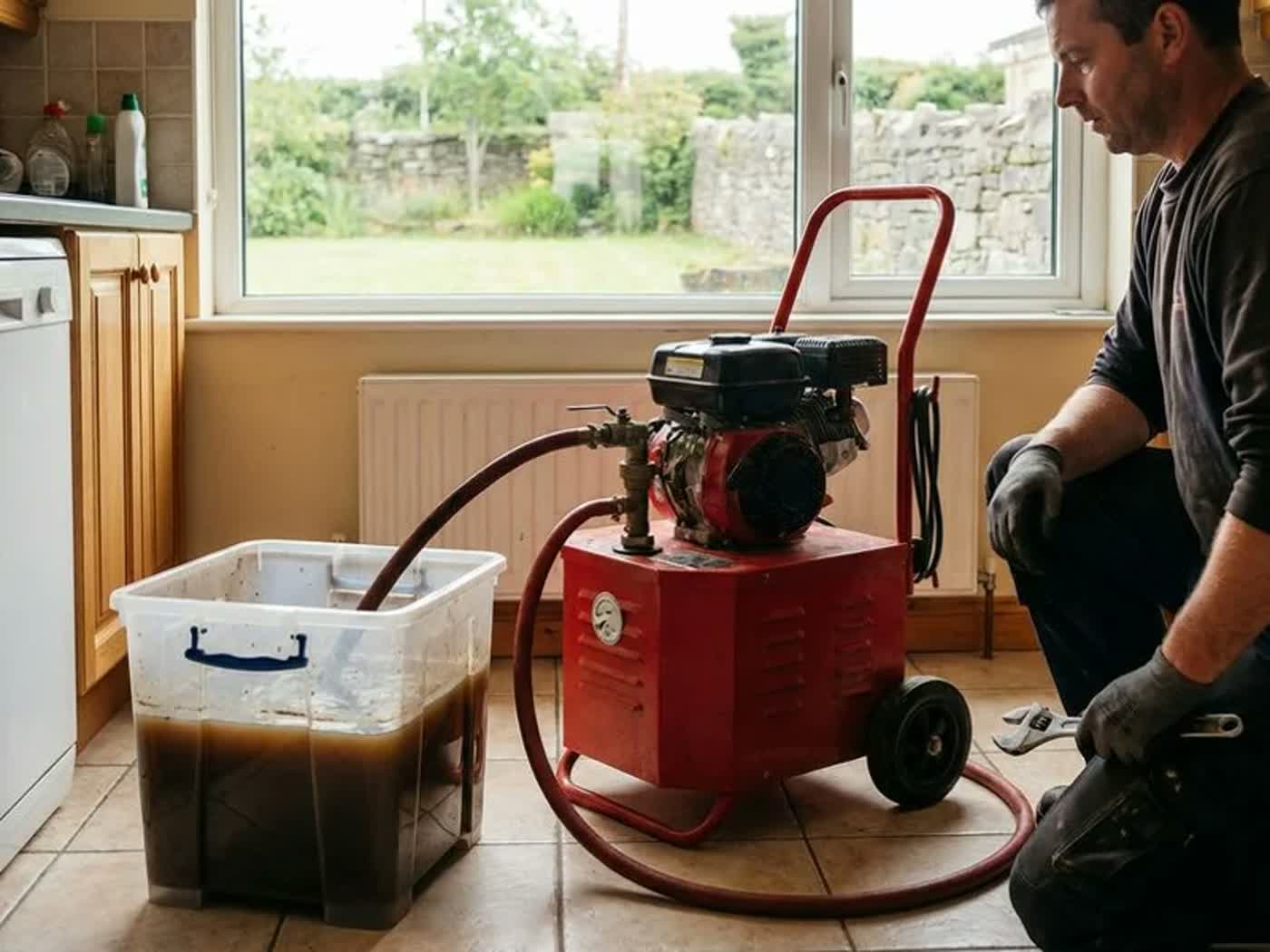
A power flush machine is a portable high-flow pump with a tank, a flow reversal valve and a dump valve, used with cleaning chemicals, a magnetic collector and a water quality meter. You can hire one, but the machine is the easy part; knowing where to connect it, how to work each radiator and when the water is clean is what makes a flush work.
A power flush machine is a portable pump unit that pushes water through your heating system at a much higher flow rate than your own circulating pump, with a switch to reverse the direction of flow and a valve to dump dirty water to the drain. On its own it does not clean much. A proper flush also uses cleaning chemicals, a magnetic collector to catch the sludge, and a meter to prove when the water is clean. You can hire the machine, but hiring it does not tell you how to use it well, and on some systems it is the wrong tool entirely.
What Is Actually in a Power Flush Machine?
The core of the kit is a pump, a tank and two valves: one to reverse the flow and one to dump dirty water. Two hoses connect it into the heating circuit so the machine, rather than your own pump, drives the water round.
The tank sits on top of or beside the pump and holds the water being circulated, so the engineer can see the colour of what comes back and add chemicals. The flow reversal valve switches the direction of flow through the system, which shakes debris loose from both sides of a blockage instead of packing it tighter. The dump valve sends dirty water to a drain while clean mains water is fed into the tank, so the system is gradually rinsed rather than simply stirred. Most professional units also have a built-in or add-on magnetic collector, because a large part of heating sludge is magnetite, a black iron oxide that magnets pull out of the water.
The Other Equipment a Proper Flush Needs
The machine does the pumping; the rest of the kit does the cleaning and proves the result. Without it, a flush is guesswork.
- Cleaning chemical: a sludge remover or descaler that loosens deposits so the flow can carry them out.
- Neutraliser and inhibitor: the cleaner is rinsed out afterwards, then a corrosion inhibitor is added to the clean water to slow the build-up of new sludge.
- Water quality meter: often a TDS (total dissolved solids) meter, used to compare system water with mains water. The flush is finished when the readings are close, not when the water looks clear.
- Test kit for inhibitor: to confirm the system has been dosed at the right strength.
- A way to check each radiator: a thermal camera or a surface thermometer shows whether every radiator now heats evenly across its surface.
The British Standard for heating system water treatment, BS 7593, sets out cleaning and treatment of this kind. If an engineer turns up with only a pump and a bottle, the job is unlikely to meet it.
How the Equipment Is Used on a Real System
The machine is connected into the circuit, the chemical is circulated, and then each radiator is flushed on its own with the others shut off, so the full flow goes through one radiator at a time.
Working radiator by radiator is what separates a power flush from simply circulating chemical round the system. With every radiator open, the water takes the easiest route and the most blocked radiators, the ones that caused the problem, get the least flow. Isolating them in turn forces the full flow through each one, with the direction reversed several times, and many engineers tap or vibrate the radiator to shift settled sludge. The dirty water is dumped and replaced until the meter shows the water is clean. Where the machine connects depends on the system: often in place of the circulating pump on older systems, or at the heating flow and return connections below a combi or system boiler. Anything inside the boiler casing is gas appliance work and must be done by a Gas Safe registered engineer. Our guide on how long a power flush takes explains why this radiator-by-radiator stage takes most of the day.
Can You Hire a Power Flush Machine and Do It Yourself?
You can hire one, and a competent DIYer can move water around with it. The harder parts are connecting it safely, working each radiator properly, disposing of the dirty water correctly and recognising when the system is not strong enough to be flushed.
The common problems with a DIY flush are practical. Old radiators and joints that were only just holding can start to weep once the sludge that was sealing them is removed, and a leak halfway through a flush can mean a wet ceiling. Open-vented systems, the kind with a small tank in the loft, need the feed and vent pipes dealt with so the machine does not pump water out of the tank. Dirty flush water must go to a foul drain, such as a toilet or a gully that connects to the sewer, not a surface water drain or gutter, because it carries chemicals and iron oxide. And without a meter, most people stop when the water looks clear, which is usually too soon. Our power flush guide makes the same point: DIY kits rarely match the flow and sequencing of a professional flush.
When a Power Flush Machine Is the Wrong Tool
Not every dirty system should be power flushed. Very old or corroded systems, some microbore pipework, and systems with a single failing radiator are often better served another way.
If radiators are rusting through at the seams, flushing will find the weak spots quickly and you may be better replacing them. Where only one radiator is badly blocked, taking it off the wall and flushing it outside can be simpler. Lightly contaminated systems can often be cleaned with a chemical cleaner circulated by the system's own pump, or with a lower-pressure magnetic cleanse (sometimes sold under brand names such as MagnaCleanse), which uses the system's pump alongside a powerful magnetic filter. Our comparison of a chemical flush and a power flush sets out when the gentler option is enough. And if the real problem is that the system is out of balance or a valve is stuck, no amount of flushing will fix it.
What to Ask an Engineer About Their Equipment
Ask how they will prove the system is clean, whether they flush each radiator individually, and what inhibitor and filter they will leave behind. The answers tell you more than the brand of the machine.
A good answer mentions a water quality reading at the start and the end, radiators flushed one at a time with flow reversal, correct disposal of the waste water, inhibitor dosed and tested, and a magnetic filter fitted or cleaned so the system stays clean. If the answer is simply that they have a powerful machine, keep asking.
Not sure whether your system needs a power flush? We test the water, check how each radiator heats, and tell you whether a full flush, a gentler clean or something else entirely is the right answer. Get in touch to arrange a visit.
Frequently asked questions
Is a power flush machine the same as a magnetic filter?
No. A power flush machine is a temporary high-flow pump used for a day to clean the system. A magnetic filter is a permanent fitting on the pipework that keeps catching sludge afterwards. Most engineers fit or clean a filter at the end of a flush so the system stays clean.
Can a power flush damage my heating system?
A flush does not create faults, but it can expose them. Radiators or joints that were close to failing and held together by sludge may start to leak once they are clean. An engineer should look for signs of this before starting and tell you if the system is too weak to flush safely.
How do you know when a power flush is finished?
By measurement, not by eye. The engineer compares the dissolved solids in the system water with the incoming mains water, and checks that every radiator heats evenly. Water can look clear while still carrying enough dissolved material to cause problems.