Leaking TRV? Why Thermostatic Radiator Valves Leak and How They Are Fixed
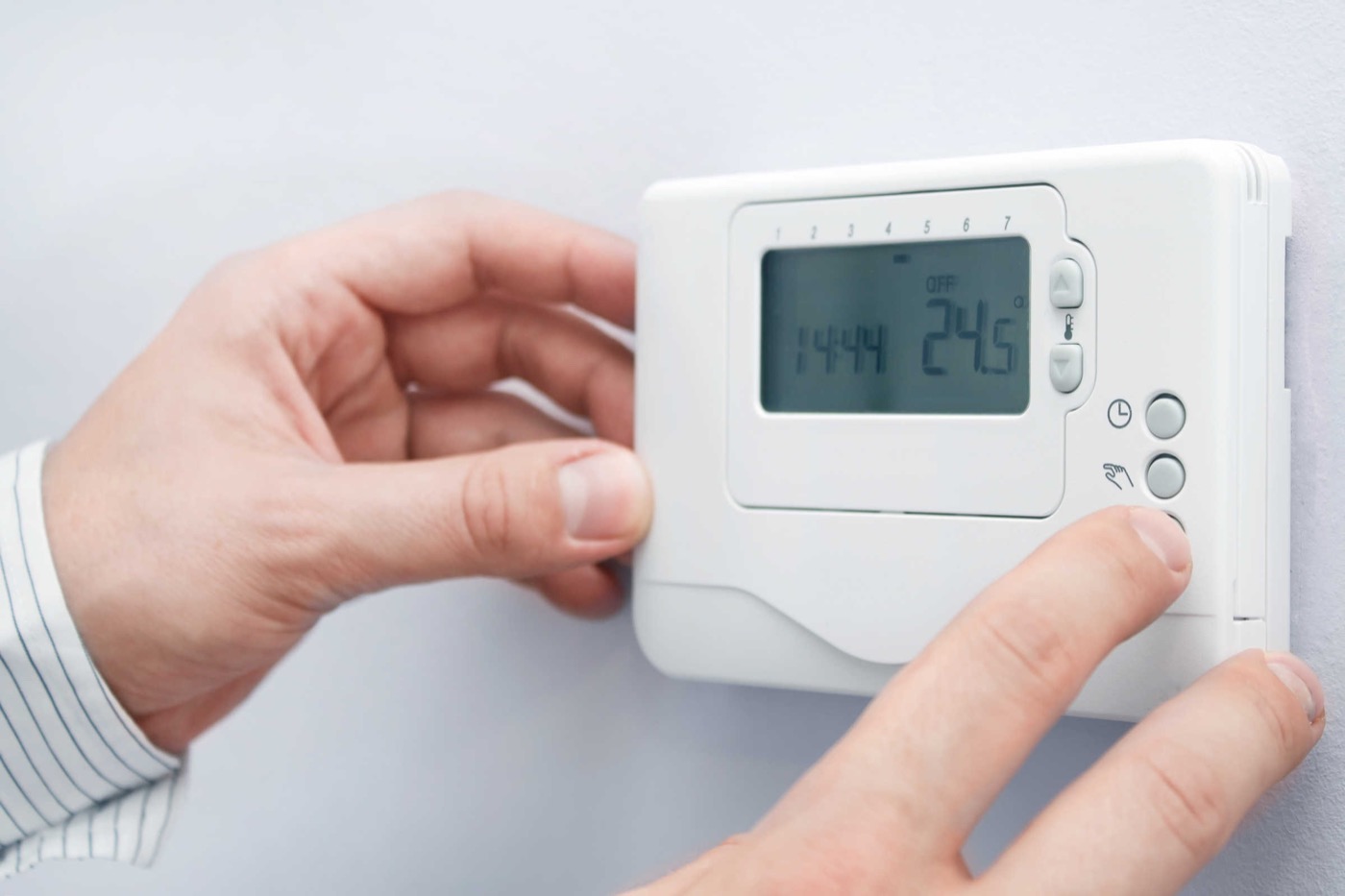
A leaking TRV leaks from the brass valve body, not the head: the seal around the pin, the nut onto the radiator, the nut onto the pipe or a cracked casting. Finding which one decides whether it is a small nip with a spanner or a new valve.
A leaking TRV is almost never leaking from the plastic head you turn. The head holds no water. The leak is coming from one of four places on the brass valve underneath: the seal around the pin at the top of the valve, the nut joining the valve to the radiator, the nut joining the valve to the pipe, or, rarely, a crack in the valve body. Which one it is decides the fix. Some are a small nip with a spanner. Others mean a new valve, and that means draining the radiator or freezing the pipe.
Where a TRV Actually Leaks
A thermostatic radiator valve has two parts: a head with a temperature sensor in it, and a brass valve body that the system water flows through. Only the body can leak. Dry the whole valve with a cloth, run the heating for a few minutes, then hold a dry tissue against each point in turn. The first one to darken is your leak.
- Under the head. Water that appears when the head is unscrewed, or that seeps out from beneath it, is coming from the gland seal around the small pin at the top of the valve body.
- At the radiator side. A drip at the large nut between the valve and the radiator is the union joint, or the threaded tail behind it that screws into the radiator.
- At the pipe side. A drip where the pipe enters the bottom or side of the valve is the compression nut and the brass ring, called an olive, that seals it onto the pipe.
- From the body itself. A hairline crack in the casting, usually from overtightening or an old frost, weeps from a point with no joint near it.
Water runs down the pipe before it drips, so the wet patch on the floor is often some way from where the water escapes. If the valve turns out to be dry, the leak is elsewhere on the radiator, and our guide to finding the source of a leaking radiator covers the bleed screw, the panel and the pipework below.
A Leak Under the Head: the Pin Gland
A leak under the TRV head comes from the seal around the valve pin, and it is the most common TRV leak. The pin is what the head pushes down to close the valve. It passes through a small seal, usually an O-ring, and that seal wears, hardens or shrinks with age.
It tends to show up at two moments: when the heating comes back on in autumn after the valves have sat unused all summer, and after someone has freed a stuck pin by working it up and down. If the valve has a separate gland nut around the pin, a small tightening can stop a light weep. On some makes the gland or the whole valve insert is a replaceable part. On many budget valves it is not, and the answer is a new valve.
Leaving the head off does not help. With the head removed the pin springs fully open, which does nothing for the seal and leaves the radiator running flat out.
A Leak at the Radiator Nut or the Pipe Nut
A leak at either nut is a joint problem, not a valve fault, and it often shows up after a radiator has been taken off and refitted or a valve has been disturbed. The fix depends on exactly where the water comes from.
- At the union nut to the radiator. Holding the valve body still with one spanner and giving the nut a small turn with another can close it. Without the second spanner, the valve twists and strains the pipe below.
- At the thread where the tail enters the radiator. Tightening the union nut will not reach this seal. The radiator has to be drained, the tail taken out, the thread cleaned and resealed.
- At the compression nut on the pipe. A small nip often seats the olive again. If it does not, the olive may be damaged or the pipe out of line, and the joint needs remaking.
Stop if a nut does not respond to a small turn. Brass fittings crack and olives crush if they are forced, and a slow weep becomes a proper leak. Wrapping tape around the outside of a joint does not seal it either; it only hides the water.
When the Valve Needs Replacing
A TRV needs replacing when the body is cracked, the pin gland cannot be serviced or tightened, the threads are corroded, or the valve is leaking and also seized or not controlling the radiator. In those cases a repair is false economy.
Changing the valve body means stopping the water in that pipe. There are two ways to do it:
- Draining down. The system, or the part of it feeding that radiator, is drained, the valve changed, then the system refilled, bled and dosed with fresh corrosion inhibitor. On a sealed system the pressure is reset at the boiler afterwards.
- Pipe freezing. A freezing kit forms an ice plug in the pipe either side of the valve so it can be changed without draining the system. It saves time on a single valve, but it does not suit every pipe or location.
Because the draining costs the same whether one valve or several are changed, it is usually worth replacing the lockshield valve at the other end of the radiator at the same time, and any other valves of the same age. Our guide to replacing a radiator valve or TRV explains what drives the price of each approach.
Older London homes add some complications. Narrow 8mm or 10mm microbore pipe needs a valve made for it or the right adaptor, and some very old systems have imperial pipe sizes. A like-for-like replacement should match the pipe size and the angle the pipe arrives at.
What to Do Until It Is Fixed
A small weep from a TRV is not an emergency, but it should not be left for weeks. Put a folded towel and a shallow container under the valve, and wipe it dry each day so you can see whether it is getting worse.
Closing the valves at both ends of the radiator isolates it from the rest of the system and can slow a leak, but it will not always stop a leak at the valve itself, because part of the valve is still connected to the pipework. Keep an eye on the pressure gauge if you have a combi or system boiler. On a sealed system every drop that escapes lowers the pressure, and once it falls far enough the boiler will stop working until it is topped up.
Treat it as more urgent if the drip becomes a steady run, water is getting under floorboards or into a ceiling below, or the boiler pressure keeps falling within a day or two of being topped up.
What a Leaking TRV Can Tell You About the System
One old valve starting to weep is normal wear. Several valves leaking, green or white crust on the joints, or black water coming out when a valve is opened are signs worth looking at more widely.
Black water is sludge, which is corrosion from the steel radiators circulating round the system. It wears valve seals and pins faster and is often behind TRV pins sticking in the first place. Leak-sealer liquids added to the system are not a fix for a valve weeping at a joint or pin; they are made for tiny leaks inside a sealed system, and your boiler manufacturer's guidance should be checked before any go in. If the water is dirty, cleaning and treating it at the same time as the valves are changed is the better long-term answer.
TRV leaking, stuck or both? We change radiator valves across London, replace the lockshields at the same time where it makes sense, and refill, treat and rebalance the system before we leave. See our TRV installation and replacement service.
Frequently asked questions
Is a leaking TRV an emergency?
A slow weep usually is not. Catch it with a towel and a container, check it daily and keep an eye on the boiler pressure on a sealed system. It becomes urgent if the drip turns into a steady run, water reaches the floor void or a ceiling below, or the pressure keeps dropping soon after being topped up.
Can I fix a leaking TRV myself?
Sometimes. A small nip on the union or pipe nut, holding the valve still with a second spanner, can stop a weep at a joint. A leak under the head that tightening does not cure, a cracked body or a leak at the tail thread means draining the radiator or freezing the pipe, which is better handed to an engineer.
Can you replace a TRV without draining the system?
A TRV head can be swapped without touching the water. Replacing the valve body means stopping the water in that pipe, either by draining down or by freezing the pipe either side of the valve. Freezing avoids draining the whole system but does not suit every pipe or position.