Unvented Cylinder Repair or Replacement: How to Decide
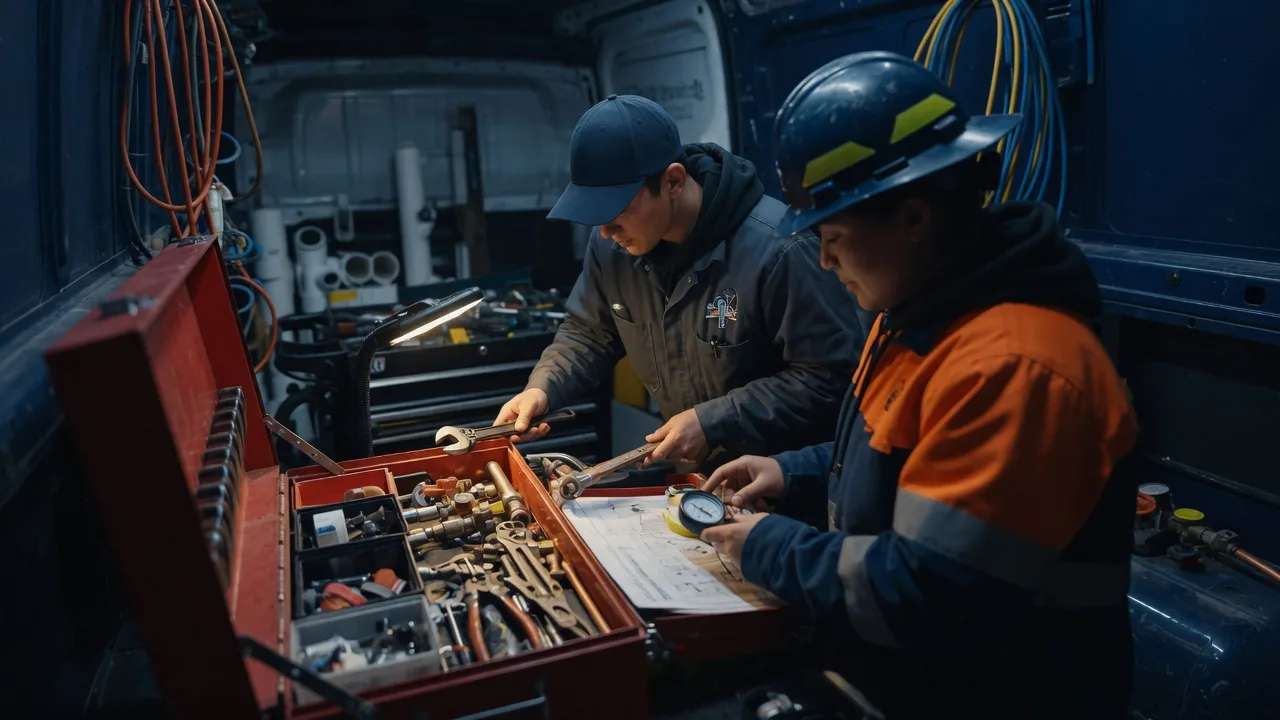
Most unvented cylinder faults are in the valves and vessel around the cylinder, not the cylinder itself. Knowing which is which is the difference between a part swap and a notifiable replacement.
The First Question: Cylinder, or the Kit Around It
When an unvented cylinder misbehaves, the instinct is to assume the cylinder has failed. More often the fault sits in the components bolted around it: the pressure reducing valve on the inlet, the expansion vessel, one of the relief valves, or an immersion heater and its thermostat. Those are serviceable parts with a shorter working life than the vessel they protect, and replacing one is a routine visit rather than a project.
The distinction matters because it changes the scale of the work. Swapping a valve is a couple of hours. Replacing the cylinder is notifiable work under requirement G3 of Part G of the Building Regulations, often drags in the discharge pipework and sometimes the incoming supply, and takes a day or more.
Faults That Are Usually a Repair
- Water dripping from the tundish or the outside discharge pipe. This is a safety device doing its job, and the usual cause is an expansion vessel that has lost its air charge or a relief valve seat that has picked up debris. Both are serviceable.
- Weak hot water flow with normal cold flow. Commonly a scaled or partly blocked strainer in the pressure reducing valve, or a failing valve cartridge. In much of London the water is hard, so this is a wear item rather than a defect.
- No hot water from the immersion heater but the boiler still heats the cylinder. An immersion heater element or its thermostat, both replaceable.
- Water hotter than it should be, or a thermal cut-out that has tripped. A cylinder thermostat or control fault. The cut-out has to be reset by hand for a reason, and the cause needs finding rather than the button simply being pressed.
- Banging or knocking when a hot tap is opened. Frequently pressure-related rather than a cylinder failure.
What these have in common is that the sealed vessel is intact. Once an engineer has confirmed that, the repair is a defined part with a defined cost.
Faults That Point to Replacement
- Water weeping from the cylinder body, a weld or a boss. The vessel is not repairable in place. A leak from the shell means replacement.
- The heating coil no longer heats the water. If the boiler runs, the cylinder thermostat and motorised valve check out, and the cylinder still only heats on the immersion, the indirect coil has failed. The coil is part of the vessel.
- Corrosion at the immersion boss or heavy internal scaling. Where an element cannot be withdrawn without damaging the boss, or where scale has significantly reduced the effective capacity, patching stops being sensible.
- Parts are no longer available. Older discontinued models reach a point where the specific relief valve or vessel kit cannot be sourced, and improvising with a generic part on a safety-critical assembly is not an option.
- The cylinder is the wrong size for how the house is now used. A cylinder that ran a single bathroom will not keep up with a loft conversion and a second shower. That is not a fault, but it is a reason to replace rather than repair.
Age and Warranty Change the Arithmetic
Manufacturers publish a warranty on the vessel, and the length of it is a fair indication of the design life they expect. What tips the decision is not age alone but age combined with a pattern. A single valve failure on an otherwise sound cylinder is a repair at any age. A second or third unrelated failure on a cylinder that is out of warranty is a signal to look at the whole assembly, because the remaining original components are the same age as the ones that have already gone.
Warranty terms usually depend on the annual service being carried out and recorded, which includes checking the expansion vessel and the relief valves. If that has never been done, a warranty claim on an otherwise valid fault can fall over on the paperwork.
What a Replacement Brings With It
Replacing the cylinder is rarely a straight swap, and quotes that treat it as one tend to grow later. Expect the work to include:
- Notification under Building Regulations, either through building control or self-certified by an installer registered with a competent person scheme for unvented work.
- A review of the discharge pipework, including the tundish position, the vertical drop beneath it and where the pipe terminates. Older installations frequently do not meet current requirements, and the new installation has to.
- New inlet control components, since the pressure reducing valve and expansion vessel are usually replaced with the cylinder rather than reused.
- A check of the incoming mains, because the new cylinder's performance depends on the measured pressure and flow rate at the property, not on the previous cylinder's reputation.
- Possible controls work, if the cylinder thermostat and motorised valve arrangement is old or was never right.
A Practical Way to Decide
Ask the engineer three things before committing. First, is the sealed vessel sound, and how was that established? Second, if this is a repair, which components are being replaced and which original ones are being left in place? Third, if it is a replacement, does the quote include the discharge pipework and the notification, or are those extra?
Where the vessel is sound and one component has failed, repair is almost always the right call. Where the vessel has failed, or where several original components are being replaced one at a time on a cylinder that is well past its warranty, replacement is usually the cheaper outcome over a few years even though it is the larger bill today.
If the cylinder decision sits alongside other work, it is worth scoping it together rather than in isolation — see our central heating system upgrade page, and our article on system upgrade against boiler replacement for how the two are usually separated.
If replacement is the answer, our guide to unvented cylinder installation in London explains what the work involves and what you should be left with.
Frequently asked questions
My tundish is dripping. Does that mean the cylinder needs replacing?
Usually not. A dripping tundish means a relief valve has opened, and the common causes are an expansion vessel that has lost its air charge or debris on a valve seat. Both are repairs. It should still be investigated promptly, because continuous discharge wastes water and points to a fault that will not clear itself.
Can an unvented cylinder be repaired if it is leaking?
It depends where from. Leaks at valves, connections and the immersion heater seal are repairable. A leak from the cylinder body, a weld or a corroded boss is not repairable in place, and replacement is the only safe outcome. An engineer needs to confirm the source before anyone decides.
Does replacing an unvented cylinder need to be notified to building control?
Yes. Replacing an unvented hot water storage system over 15 litres is notifiable work under G3 of Part G, in the same way as a new installation. It is either notified to local authority building control or self-certified by an installer registered with a competent person scheme for that work.
How long does an unvented cylinder last?
There is no fixed figure, and manufacturers' warranty periods are the best published guide to expected design life. Water hardness, whether the annual service and expansion vessel checks were carried out, and how hard the cylinder has been worked all affect it. A pattern of repeated component failures out of warranty is usually more telling than age alone.