When to Turn the Heating On in the UK, and What to Check
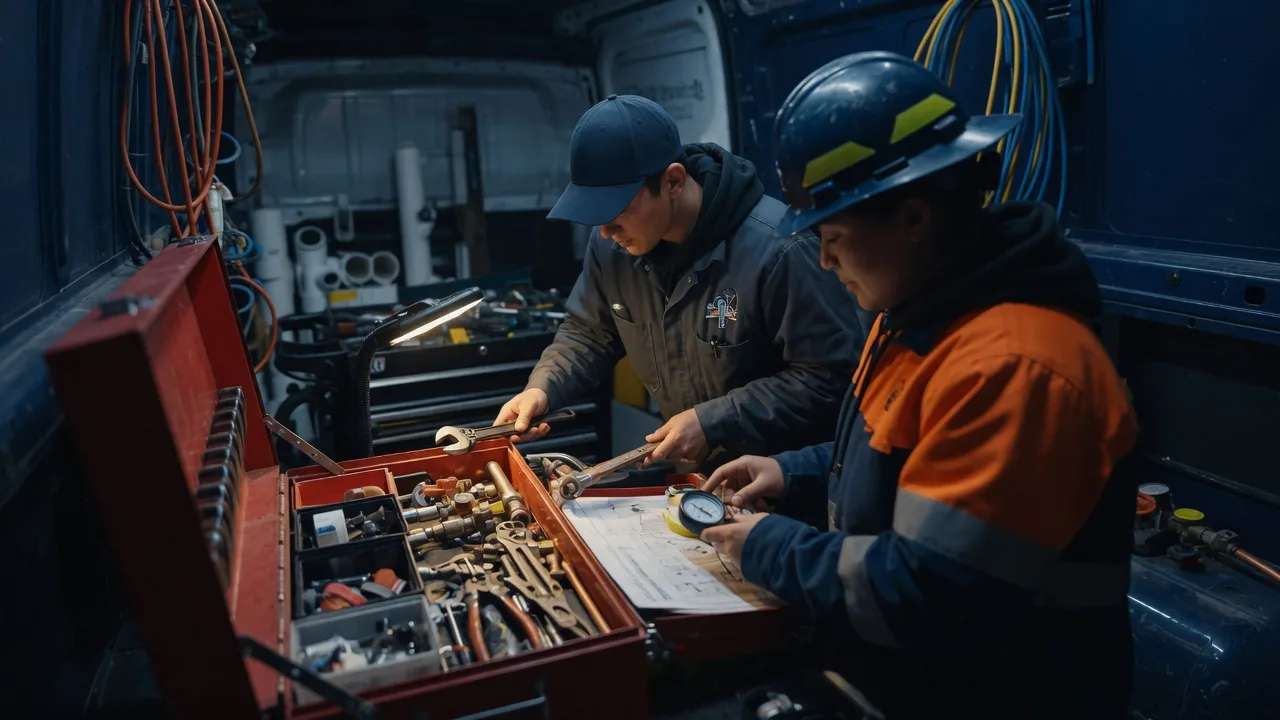
Go by the temperature indoors, not the date. Most UK homes switch on somewhere between late September and October, and a short test run before the first cold week is the easiest way to find faults while there is still time to fix them.
There is no official date to turn the heating on in the UK. Go by the temperature inside your home rather than the calendar: once the rooms you use stay below a comfortable level, it is time. UK public health guidance suggests keeping the rooms you live in at 18°C or above, which matters most for older people, babies and anyone with a health condition. For many households that point arrives somewhere between late September and October. Whenever you switch on, run a short test beforehand, because the first cold week is when faults show up and when engineers are busiest.
Temperature, Not the Date
A room thermostat takes the guesswork out of it. Set it to the temperature you want, commonly somewhere between 18°C and 21°C, and the system only fires when the house drops below that. With a thermostat and timer set sensibly, it does not matter much what the date is: on a mild day the heating simply will not come on.
If you have no working room thermostat, or it sits in a room that is always warmer or colder than the rest of the house, that is worth fixing before winter. Our smart heating controls service covers thermostats and programmers, and our guide to smart heating zoning explains how room-by-room control works.
Do a Test Run Before You Need It
Pick a mild afternoon and run the heating for an hour. A system that has sat idle all summer can have stuck valves, low pressure or air in the radiators, and it is far better to find that out in September than on the first freezing night of November, when everyone else is calling an engineer at the same time.
First Switch-On Checklist
Boiler pressure
On a sealed system, which covers most combi and system boilers, check the gauge with the system cold. Your boiler manual gives the correct range. If it has dropped since last winter, top it up and keep an eye on it. If it keeps falling, the system is losing water. See our guide to why a system won't hold pressure.
Every radiator heats fully
Once the heating has run for half an hour, feel each radiator carefully. A radiator cold across the top has trapped air and needs bleeding; our guide on which radiator to bleed first explains the order. A radiator cold along the bottom is more likely to be sludge. A radiator cold all over may have a stuck valve.
Stuck TRV pins
This is the most common fault at the start of the season. A thermostatic radiator valve left turned down all summer can have its pin stuck in the closed position, so the radiator stays cold whatever the setting. Take the head off and check whether the pin moves. Our article on TRV faults shows how to free it.
Noises
Some ticking as pipes expand is normal. Kettling from the boiler, banging in the pipes or rushing water in one radiator is not. Our guide to noisy radiators and pipes explains what the different sounds mean.
Timer and thermostat settings
Check the programmer still has the right times and that thermostat batteries are fresh. The clocks go back at the end of October, and older mechanical timers do not adjust themselves.
The boiler itself
If the boiler shows a fault code, will not fire, or you notice any smell of gas, stop. A gas smell means turning off the supply at the meter if you can do so safely and calling the National Gas Emergency Service on 0800 111 999. Anything on the boiler itself is work for a Gas Safe registered engineer, and if the boiler has not had its annual service, early autumn is the time to book it.
On Low All Day, or On and Off?
This comes up every year. The Energy Saving Trust's long-standing advice is that, for most homes, heating only when you need it, using a timer and a room thermostat, costs less than leaving the heating on low all day, because a house loses heat all the time it is warm. There are exceptions, such as well-insulated homes with heat pumps or underfloor heating, which respond slowly and suit steadier running. For a typical London house with gas central heating and radiators, a sensible timer and thermostat setting is the place to start.
Turning TRVs down in rooms you do not use, rather than off completely, saves energy without letting those rooms get cold enough for condensation and mould. Our guide to how TRVs work covers the settings.
Problems Worth Fixing Before Winter
A test run often shows up faults that are easy to live with in October and miserable in January:
- Some rooms warm, others never quite get there. Usually an unbalanced system. Our guide to why one room is always cold explains the cause, and our system balancing service fixes it.
- The house takes hours to warm up. See our article on why heating takes so long to warm up.
- Radiators cold at the bottom, or black water when bled. Sludge. A power flush and a magnetic filter restore circulation.
- Radiators too small for the room. Common after an extension or when rooms change use. Our radiator installation service covers replacement and upsizing.
Get It Sorted Before the Rush
If your test run has turned up cold radiators, uneven heat, noise or pressure that will not hold, now is the best time to deal with it. Book a free survey and we will look at the whole system, not just the symptom, and give you a fixed quote before any work starts.
Frequently asked questions
What month should you turn the heating on in the UK?
There is no set month. Most households switch on somewhere between late September and October, once indoor temperatures in the rooms they use stay below a comfortable level. Using a room thermostat means the heating only runs when it is actually needed, whatever the date.
What temperature should I set my heating to?
UK public health guidance suggests keeping the rooms you use at 18°C or above, especially for older people, young children and anyone with health conditions. Many households set the thermostat somewhere between 18°C and 21°C, with bedrooms and unused rooms lower.
Is it cheaper to leave the heating on low all day?
For most homes with gas central heating and radiators, no. The Energy Saving Trust advises heating only when you need it, using a timer and thermostat, because a warm house loses heat continuously. Slow-responding systems such as heat pumps and underfloor heating can be an exception.
Why are my radiators not working after the summer?
The most common reason is a TRV pin that has stuck closed after months turned down. Other causes are air collected in the radiators, low boiler pressure on a sealed system, or a lockshield valve left closed. Check each in turn before calling an engineer.
Should I bleed my radiators before winter?
Only if they need it. Run the heating and feel each radiator: one that is cold across the top has trapped air and should be bled. Bleed with the heating off and the radiators cooled, then check the boiler pressure afterwards.