How Does Underfloor Heating Work? Wet and Electric Systems Explained
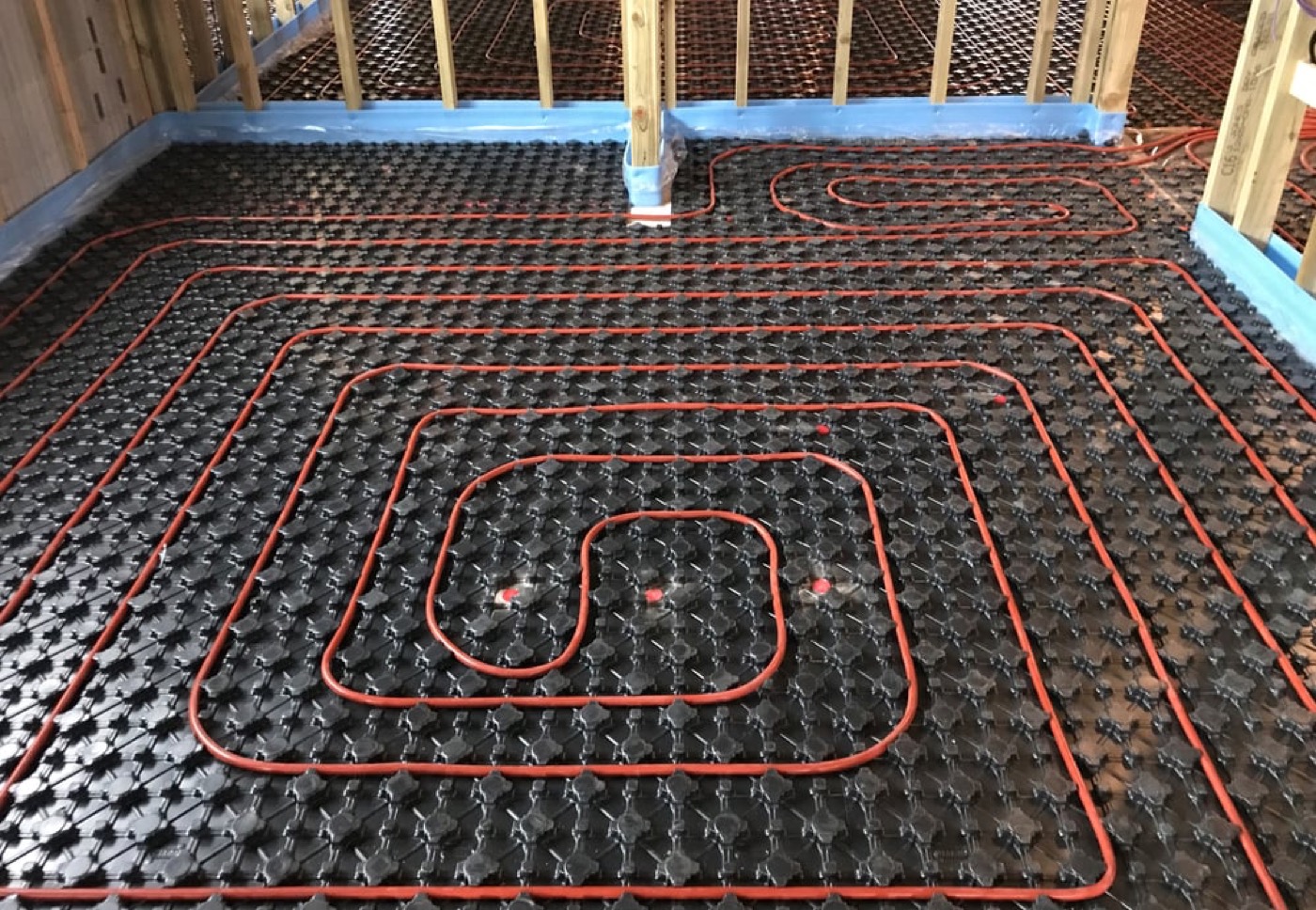
Underfloor heating turns the whole floor into a gentle, low-temperature heater, using either loops of warm-water pipe fed from a manifold or electric heating cables under the floor finish. It heats slowly and evenly, and the floor covering makes a big difference.
Underfloor heating works by warming the whole floor, which then warms the room from the ground up. A wet system does this with loops of plastic pipe carrying warm water from your boiler or heat pump; an electric system uses thin heating cables or mats laid under the floor finish. Because the heat comes from a large surface, the floor only needs to be a little warmer than the room, which is why underfloor heating runs at much lower temperatures than radiators and feels even rather than hot. If you are choosing between the two types, our comparison of wet vs electric underfloor heating installation costs sets them side by side.
The Basic Idea: The Floor Becomes the Heater
A radiator is a small surface that has to run hot to heat a room. Underfloor heating spreads the same job over the whole floor, so each square metre only needs to be gently warm.
The floor gives off most of its heat as radiant warmth, straight to the people and furniture in the room, rather than by moving air around. That is why a room with underfloor heating can feel comfortable at a slightly lower air temperature, and why there are no cold corners or hot spots next to a radiator. The surface of the floor stays only comfortably warm to the touch, not hot.
How Wet Underfloor Heating Works
A wet system runs loops of plastic pipe under the floor and pumps warm water through them from your boiler or heat pump. The water is much cooler than radiator water, typically somewhere around 35 to 45°C for a screed floor.
The pipes are laid in one of two ways. In new builds, extensions and ground floors being dug up, they are clipped onto insulation and buried in a layer of screed, which spreads the heat and stores it. In existing rooms, where raising the floor by several centimetres is not possible, low-profile boards with pre-cut channels hold the pipes and spread the heat with aluminium plates. Either way, insulation underneath is essential; without it, much of the heat goes down into the ground or the ceiling below.
Each room or area usually has its own loop, or several loops in a large room, and its own thermostat, so rooms can be controlled separately.
The Manifold and Mixing Valve
The manifold is the distribution point for a wet system: a pair of rails, usually in a cupboard, where every loop starts and finishes. It has its own pump and a mixing valve that blends hot boiler water with cooler return water to bring it down to underfloor temperature.
On the manifold you will usually see a flow meter for each loop, used to balance them so long and short loops heat evenly, and small actuators on the return rail that open and close each loop when its room thermostat calls for heat. When a single room stops warming up, the fault is often at the manifold rather than under the floor. Our guide to common underfloor heating manifold problems covers the usual culprits. Heat pumps already produce low-temperature water, so some heat pump systems can do without the mixing stage altogether.
How Electric Underfloor Heating Works
Electric underfloor heating uses heating cables, often pre-spaced on a mesh mat, laid on the subfloor and covered by the tile adhesive or a thin levelling layer. When current flows, the cables warm up and heat the floor directly.
There is no plumbing, no manifold and no connection to the boiler. Each area has a thermostat, usually with a probe in the floor so it can limit the surface temperature. Electric systems are thin and quick to fit, which makes them popular for bathrooms and kitchens with tiled floors. The trade-off is that electricity costs more per unit than gas, so they suit smaller areas better than whole floors. Our comparison of wet and electric underfloor heating running costs sets out when each makes sense.
Why Underfloor Heating Warms Up Slowly
A screed floor can take a few hours to warm through from cold, because the screed has to heat up before the room does. That same stored heat means it also cools down slowly once it switches off.
This changes how you run it. Short bursts of heating twice a day, which suit radiators, work poorly with a screed system. Most people get better results with longer, steadier schedules and a small setback overnight rather than switching off. Board systems and electric mats under tiles respond faster because there is less mass to heat, but they still will not match a radiator for a quick blast of warmth. If you want a room hot within minutes of walking in, underfloor heating is the wrong tool on its own.
Floor Coverings Make a Real Difference
Everything laid on top of the heating slows the heat getting into the room. Tiles and stone work best, engineered wood and laminate work well within temperature limits, and thick carpet with heavy underlay is the hardest to heat through.
Installers usually work to a limit on the combined thermal resistance of carpet and underlay, commonly quoted as about 2.5 tog, and wood floors come with maximum surface temperatures set by the flooring manufacturer. Choose the floor covering before the system is designed, not after, because it affects pipe spacing, water temperature and how much heat the room can actually get.
How It Fits With Your Existing Heating
Wet underfloor heating can run from most boilers alongside radiators, with the manifold's mixing valve keeping the two temperatures apart. Whether your particular boiler and pipework can carry the extra load is a question for a survey.
Our guide to whether underfloor heating works with your existing boiler covers the checks, including boiler output, pipe sizes and controls. If you are planning an extension, kitchen or bathroom and want to know which system suits the room, our underfloor heating installation service starts by looking at the floor build-up, the covering and how the room is used. Any change to the boiler itself must be made by a Gas Safe registered engineer.
Frequently asked questions
Does underfloor heating heat the whole room?
Yes, when it is designed for the room's heat loss. Because it heats from the whole floor area, warmth is spread evenly rather than concentrated near a radiator. Rooms with large windows or poor insulation may need closer pipe spacing or a supplementary radiator.
How long does underfloor heating take to warm up?
A wet system in a screed floor can take a few hours from cold, because the screed warms first. Board systems and electric mats under tiles respond more quickly. Most systems are run on long, steady schedules rather than short bursts.
Can you have underfloor heating and radiators on the same system?
Yes. Wet underfloor heating is commonly run alongside radiators from the same boiler, with a mixing valve at the manifold bringing the water down to the lower temperature the floor needs.