Underfloor Heating vs Radiators: Which Is Better for Your Home?
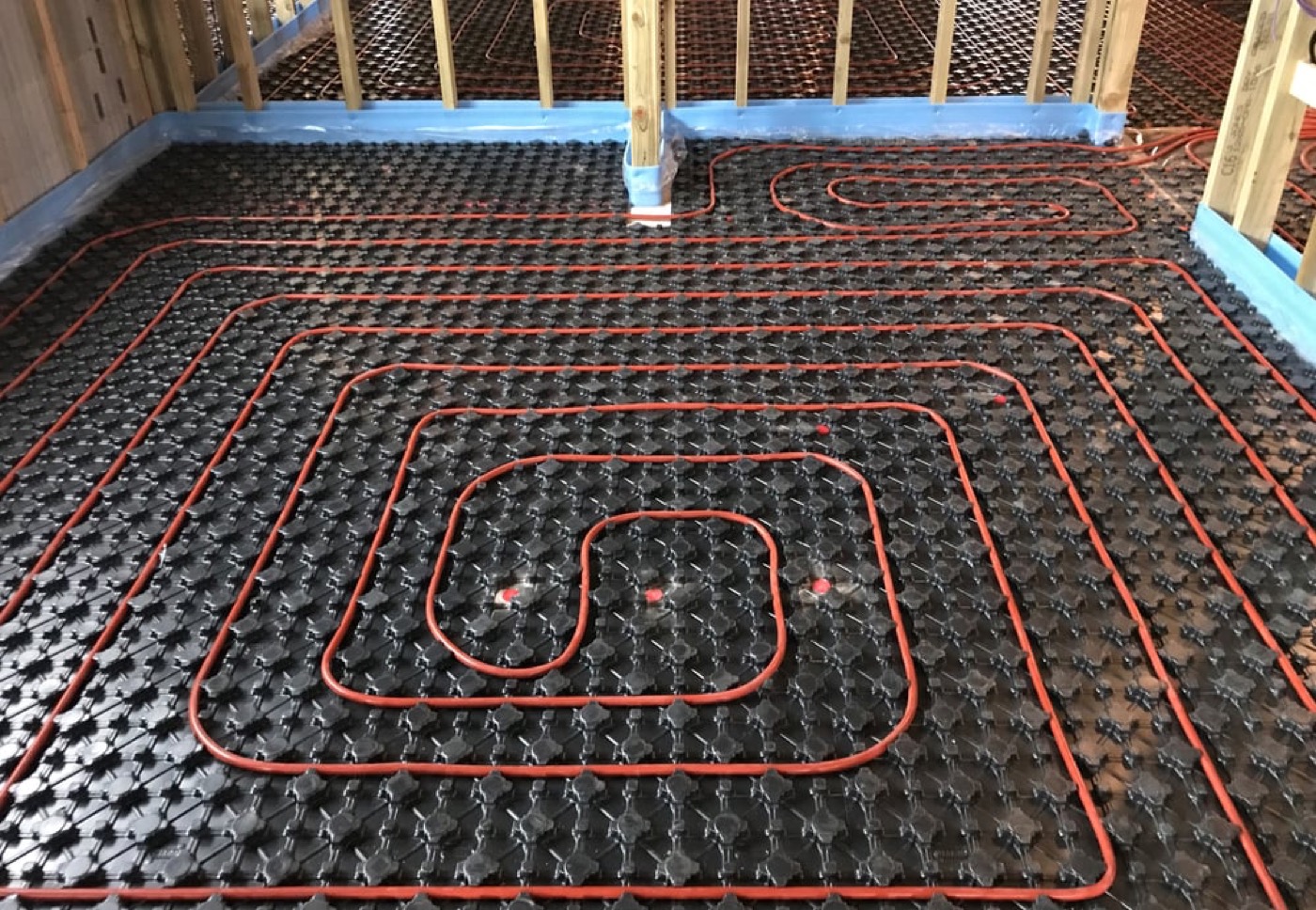
Underfloor heating gives more even warmth and frees up your walls; radiators heat faster, cost far less to fit in an existing home and are easier to repair. Here is how they compare on comfort, running cost, heat pumps and installation, and when radiators are the better answer.
Underfloor heating or radiators: which is better? Underfloor heating gives more even, gentler warmth and frees up your walls; radiators warm a room faster, cost far less to fit into an existing home and are easier to repair. On the same boiler, the running-cost gap is smaller than most people expect. It widens in favour of underfloor heating when a heat pump is involved, and it swings the other way when the underfloor heating is electric.
Underfloor Heating vs Radiators: The Short Answer
Choose underfloor heating where the floor is coming up anyway, and radiators where it is not. That rule covers most London homes.
Underfloor heating makes the most sense in a new extension, a full ground-floor renovation or a kitchen-diner with large glazed doors, where the screed or subfloor is being laid regardless and wall space is short. Radiators make more sense in upstairs bedrooms, flats with concrete floors you cannot raise, rooms used for an hour or two at a time, and any room where the existing heating works and the floor is staying put.
- Comfort: underfloor heating wins, with warm floors and no hot and cold spots.
- Speed: radiators win, heating a room in a fraction of the time.
- Cost to fit in an existing room: radiators win by a wide margin.
- Running cost on a gas boiler: broadly similar, with a modest edge to wet underfloor heating.
- Running cost on a heat pump: underfloor heating has a clear edge.
Which Heats a Room Better?
Underfloor heating heats a room more evenly; radiators heat it more quickly. Which matters more depends on how you use the room.
A radiator heats the air next to it, which rises to the ceiling, spreads across and falls as it cools. That leaves the space near the ceiling warmer than the space near the floor, and the far side of a large room cooler than the side with the radiator. Underfloor heating turns the whole floor into a low-temperature emitter. The warmth comes up evenly from under your feet, so the room feels comfortable at a slightly lower thermostat setting and there is no cold corner.
The trade-off is response time. A radiator is warm within minutes of the boiler firing. Underfloor pipes set in screed can take a few hours to bring the floor up to temperature and a few hours to cool down again. That suits a room that is heated steadily through the day, such as an open-plan kitchen or a living space in a well-insulated extension. It suits a spare bedroom or a room you heat for one evening a week badly.
Output is the other limit. Underfloor heating can only put out as much heat as a comfortable floor surface temperature allows. In a well-insulated room that is plenty. In a draughty Victorian room with a single-glazed bay window, it may not keep up on its own, and a heat-loss calculation should decide that before anything is laid.
Which Is Cheaper to Run?
With the same heat source, wet underfloor heating is usually a little cheaper to run than radiators, not dramatically so. Electric underfloor mats cost more to run than radiators on a gas boiler.
The heat a room needs is set by how fast it loses heat through its walls, windows, floor and ceiling. Neither system changes that. What underfloor heating changes is the water temperature needed to deliver the heat. Radiators typically need hotter water than underfloor heating, which runs roughly in the 35°C to 55°C range. A condensing gas boiler works most efficiently when the water coming back to it is cool, so a system that runs cooler gives the boiler an easier time. The saving is real, but it is a margin, not a transformation.
The comparison changes with electric underfloor heating. Electric mats turn nearly all their electricity into heat, but electricity costs several times more per unit than gas, so heating a large floor with electric mats costs more than heating the same room with a radiator on a gas boiler. We go through that in detail in wet vs electric underfloor heating running costs.
Heat Pumps: Where the Choice Matters Most
If you have a heat pump or plan to fit one, underfloor heating is the better emitter. A heat pump's efficiency rises as the water temperature it has to produce falls, and underfloor heating needs the lowest temperatures of any wet system.
That does not mean radiators and heat pumps are incompatible. Radiators work with a heat pump when they are big enough to heat each room at a lower water temperature, which often means some are upsized, swapped for double-panel versions or given extra fins. If you are weighing up a heat pump, it is worth checking whether your radiators are big enough for a heat pump before assuming every floor has to come up. In many homes the practical answer is underfloor heating downstairs where the floor is being renewed, and correctly sized radiators upstairs.
Which Is Easier to Install in an Existing London Home?
Radiators, by a long way. A radiator hangs on a wall and connects to pipes that are usually already there; wet underfloor heating needs the floor lifted or built up, insulation laid beneath the pipes and a manifold found a home.
In an existing room, fitting underfloor heating means clearing it, taking up the floor covering, dealing with the floor height at door thresholds and kitchen units, and, with a screed system, waiting for the screed to cure before the final floor goes down. Suspended timber floors, common in Victorian and Edwardian terraces, need a different method again, with the pipes fixed between or over the joists using spreader plates. In a block of flats, raising the floor may not be possible at all, and the lease may restrict what can go under it.
Floor finish matters too. Tile and stone pass heat through well. Engineered wood works if it is rated for underfloor heating and the water temperature is kept within its limit. Thick carpet with heavy underlay acts as insulation and cuts the output noticeably. If you want to see what an existing floor would involve, our guide to retrofitting wet underfloor heating into an existing floor covers screed, overlay boards and timber floors.
Can You Have Both on the Same System?
Yes, and in London homes it is the most common outcome. Underfloor heating in the ground-floor extension and radiators everywhere else can run from the same boiler.
The underfloor circuits connect through a manifold with its own pump and blending valve, which mixes the hotter boiler water down to the lower temperature the floor needs, while the radiators carry on at their usual temperature. Each area is best on its own zone, with a thermostat for the underfloor room and TRVs or zone control for the radiators, so the slow floor and the fast radiators are not fighting over one timer. Water quality matters more once underfloor pipes are on the system: their long, narrow loops clog more easily with sludge, so a clean system, inhibitor and a magnetic filter are worth having in place before the floor is connected. If you are planning a mixed system, our underfloor heating installation service starts with a survey of the existing boiler and pipework.
When Radiators Are the Better Choice
Radiators are the better choice whenever the floor is staying where it is, the room is heated in short bursts, or the budget has to go on the rest of the system. Underfloor heating is not an upgrade for every room.
- Bedrooms and upstairs rooms: heated mainly in the morning and evening, where a radiator's fast response is a benefit.
- Flats with solid floors: where the floor height cannot change or the building does not allow it.
- Rooms that are cold because of a fault: a cold room caused by an unbalanced system, sludge or an undersized radiator is fixed by balancing, flushing or a bigger radiator, not by replacing the emitter type.
- Rooms with heavy heat loss: large single-glazed windows or uninsulated floors, until the insulation is dealt with.
If a room is uncomfortable now, find out why before choosing a new system. Often the existing radiators are fine and the system around them is the problem.
Frequently asked questions
Is underfloor heating more efficient than radiators?
Wet underfloor heating runs at a lower water temperature than radiators, which helps a condensing boiler and especially a heat pump work more efficiently. On a gas boiler the saving is modest. Electric underfloor heating is not cheaper to run than radiators on gas, because electricity costs more per unit.
Is underfloor heating enough to heat a room on its own?
In a well-insulated room, usually yes. In a room with high heat loss, such as a large single-glazed bay or an uninsulated floor, it may not keep up on its own. A room-by-room heat-loss calculation should confirm it before the floor is laid, and a radiator can be kept as a top-up where needed.
Can underfloor heating and radiators run off the same boiler?
Yes. The underfloor circuits connect through a manifold with its own pump and blending valve, which lowers the water temperature for the floor while the radiators run at their normal temperature. The two areas are best controlled as separate zones.